
What is Bitcoin mining?
Last updated
Written by

Reviewed by

As stated in the Bitcoin white paper:
The steady addition of a constant amount of new coins is analogous to gold miners expending resources to add gold to circulation. In our case, it is CPU time and electricity that is expended.
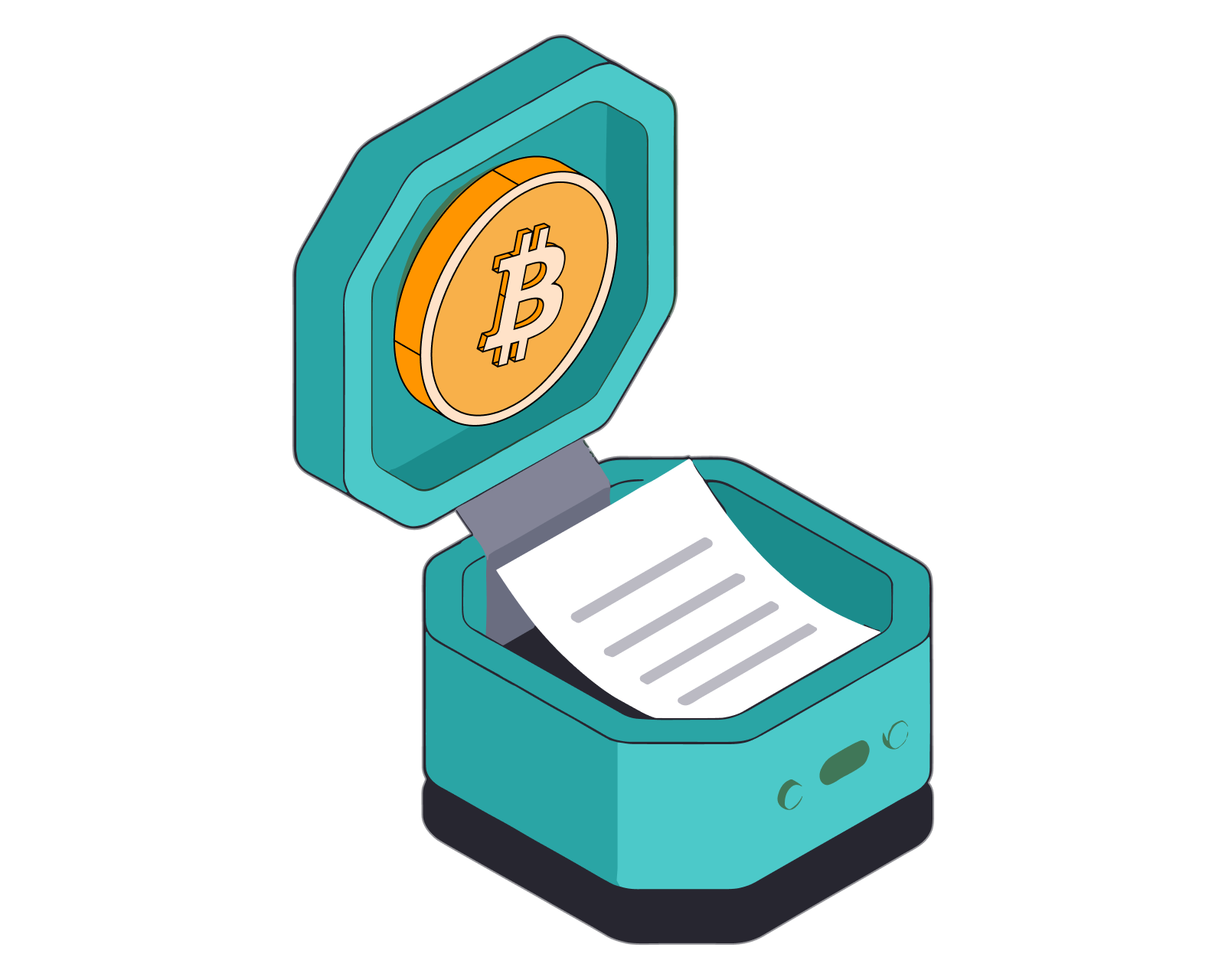
- People compete to earn bitcoin rewards by applying computing power in a process known as 'Proof-of-Work' (PoW). The process is named such because only participants (miners) who have proven they've dedicated sufficient resources (work) will have a chance at winning the rewards.
- Approximately every 10 minutes, rewards are distributed to a single winning 'miner.'
- Rewards are twofold -> (1) The 'block reward,' which is newly minted bitcoin. At the time of writing, the block reward is set at 6.25 bitcoins (but will be cut in half from early May 2024, then cut in half again four years later and so on). (2) The fees associated with all transactions in the current block. End users wishing to make a transaction must attach a fee to the proposed transaction as incentive for miners to include it in the next block.
Table of Contents
- Why is Bitcoin mining needed?
- What is Proof-of-Work and why is it necessary?
- How does Bitcoin mining work?
- What is Bitcoin's hashing algorithm?
- What is the difficulty adjustment in bitcoin mining and why is it needed?
- Is Bitcoin mining legal?
- Is Bitcoin mining bad for the environment?
- Is Bitcoin mining profitable?
- How does Bitcoin mining affect the price of Bitcoin?
Why is Bitcoin mining needed?
Bitcoin mining is an essential component of the network's method for arriving at consensus as to the current state of the ledger. It is also critical for hardening the network against attacks. In other words, Bitcoin mining is central to enabling people to securely make Bitcoin transactions. To understand why, let’s look in more detail at how Bitcoin works.
The Bitcoin network is a globally distributed public ledger consisting of a giant list of timestamped transactions. For example, one ledger entry might indicate that Person A sent 1 bitcoin to Person B at 10am on Monday. The ledger is updated approximately every 10 minutes by adding 'blocks' that contain a list of new transactions. The existence of the ledger, which is voluntarily stored by thousands of participants known as 'nodes,' allows anyone to see both the current state and complete history of Bitcoin ownership.
By design, there is no centralized authority deciding which transactions should be added to new blocks. Instead, the state of the ledger (aka the 'truth') is arrived at collectively and through coordination by nodes in accordance with the Bitcoin protocol. This decentralization is what gives Bitcoin some of its most interesting properties - namely, censorship-resistance and permissionless-ness.
Most nodes simply store the history of the ledger, validate the authenticity of new transactions according to the rules of the protocol, and pass on new blocks of transactions to other nodes. In this way, the state of the network propagates around the world until all nodes have the same information. At that point, there is a new ‘truth’ about who owns what.

Importantly, a small group of nodes, called miners, compete to be the one to actually create each new block. The updated truth about who owns what starts with a single miner who has won the right to create a new block. Winning the right to create a new block is settled through a competition known as “Proof-of-Work."
What is Proof-of-Work and why is it necessary?
Proof-of-Work (PoW) mining is a way to mathematically prove that a network participant has skin in the game. It works by forcing participants to prove that they have completed some arbitrary calculations that consume energy (work). The requirement to spend energy is important because it makes it extremely costly for bad actors to participate. In other words, it ensures that attacking Bitcoin is a money-losing (and very costly) prospect, making it exceedingly unlikely to occur.
From a game theory perspective, PoW mining provides several advantages:
- Incentivizes Honest Behavior: Miners are incentivized to follow the rules and validate transactions correctly. If they try to cheat the system, they risk losing their potential block reward and the energy/resources invested in the mining process.
- Security Through Cost: The effort (computational work) required to add a block makes the blockchain secure against attacks. Any attempt to alter past transactions (i.e., carry out a 51% attack) would require enormous computational power, thus making such attacks expensive and impractical.
- Fairness: The probability of mining a block and receiving a reward is proportional to the amount of computational resources a miner deploys. This provides a fair mechanism of distributing new coins and also allocating the decision power over the addition of new blocks.
- Sybil Resistance: PoW mining makes Sybil attacks (where an entity creates many false identities to influence the network) unfeasible because of the high cost associated with mining for each identity.
How does Bitcoin mining work?
The process is summarized in the Bitcoin white paper:
1. New transactions are broadcast to all nodes.
2. Each node collects new transactions into a block.
3. Each node works on finding a difficult Proof-of-Work for its block.
4. When a node finds a Proof-of-Work, it broadcasts the block to all nodes.
5. Nodes accept the block only if all transactions in it are valid and not already spent.
6. Nodes express their acceptance of the block by working on creating the next block in the chain, using the hash of the accepted block as the previous hash.
Let's break that down into a little more detail.
To begin, miners are the ones who propose updates to the ledger and only miners who have successfully completed the Proof-of-Work (PoW) are permitted to add a new block. This is coded into the Bitcoin protocol.
Miners are free to select valid transactions from a pool of potential transactions that are broadcast to the network by nodes. Such transactions are collected into the 'mempool.' Rational and honest miners select transactions from the mempool based on the fees attached to them, optimizing for higher fees. This gives rise to the fee market, which helps to ensure the limited block space is used fairly and efficiently.
The first miner to complete the PoW, broadcasts his proposed new block to the wider network of nodes who then check to ensure that the block follows the rules of the protocol. The key rules here are (1) all transactions in the block are valid (ie. there are no double spends), and (2) the new block appropriately references the previous block and is numbered as the next in the chain (ie. the new block constitutes the latest block in the longest chain). If it does, nodes send it on to other nodes who complete the same process. In this way, the new block propagates across the network until it is widely accepted as the 'truth.'
However, it can (and regularly does) happen that more than one miner completes the PoW at almost the same time and simultaneously broadcasts her new block out to the network. Moreover, due to network delays and geographic separation, nodes may receive new proposed blocks at slightly different times.
Importantly, one miner's newly proposed block could be slightly different from another’s! This is because, as mentioned, miners are the ones who choose which transactions to include in a block- and even though they tend to optimize for profitability, location and other factors introduce variation. When two miners send out different new blocks, competing versions of the 'truth' begin to propagate across the network. The network ultimately converges on the 'correct' version of the truth by selecting the chain that grows longer at faster rate.
Let's break down that last part. Imagine there are two competing chains. Let's say 75% of miners select version A (because it was the first version they saw) and begin their PoW for the next block, building on top of version A. The other 25% of miners select version B (again, because that's the version they happened to come across first) and initiate the same process building on top of that version. Statistically, one of the miners working on version A is likely to complete the Proof of Work first, broadcasting the new version out to the network. Since nodes always select for the longest chain, version A will quickly come to dominate the network. In fact, the probability that version B will grow faster vanishes exponentially with each additional block such that by the time six blocks have been added, it's a statistical impossibility. For this reason, a transaction that has been confirmed in six blocks is, for most participants, considered to be set in stone. ‘Finality’ of transactions in Bitcoin, then, is six blocks, or about 1 hour.
Note that a block which doesn't end up becoming part of the longest chain (version B in our example above) is known as an orphan block. It is estimated that such blocks are created between 1 and 3 times per day. Transactions that are included in an orphan block are not lost. That's because if they weren't already included in the version that ends up being the longest chain, they'll end up being added to the next block of the longest chain.
You can start mining right now using the services of GoMining.
What is Bitcoin's hashing algorithm?
Bitcoin uses a military-grade encryption algorithm called Secure Hash Algorithm 2 (SHA2). Bitcoin miners are awarded BTC when they find a random number that can only be generated by running the hashing algorithm over and over again. This process is analogous to a lottery where buying more tickets increases your chances of winning. By dedicating more computing power to the hashing algorithm, miners are effectively buying more lottery tickets.
What is the difficulty adjustment in bitcoin mining and why is it needed?
The difficulty level for the Proof of Work algorithm is automatically adjusted every 2,016 blocks, or roughly every 2 weeks. Adjustments are made with the goal of keeping the mining of new blocks constant at 10 minutes per block.
The difficulty adjustment factors in the total volume of computing power, or 'hashpower,' being applied to the hashing algorithm. As computing power is added, the difficulty is increased, making mining more difficult for everyone. If computing power is removed, difficulty is reduced, making mining easier.
Note that the difficult adjustment system makes bitcoin mining quite different from the mining of precious metals. If, for example, the price of gold rises, more miners are enticed to join the market. The addition of more gold miners will inevitably result in more gold produced. By forces of supply and demand, this will eventually lower the market price of gold. In Bitcoin's case, however, the volume of bitcoin produced (minted) is predetermined by the Bitcoin protocol. This means that it is not affected by the number and power of miners. Therefore, no matter how much mining power is directed towards the algorithm, the volume of Bitcoin produced will not be affected.
Is Bitcoin mining legal?
Bitcoin mining is legal in most countries, including the U.S. and Europe. In most regions, Bitcoin miners simply need to be cognizant of laws pertaining to the utilization of electrical power and data infrastructures to ensure they adhere to local rules and regulations.
In some regions, local regulators have imposed or moved to impose restrictions on Bitcoin mining. The most common reasons cited are that Bitcoin mining has a negative impact on local electrical grids and/or that it has negative environmental impacts. For example, Vice Chair of the European Securities and Markets Authority Erik Thedéen, said in November 2021 that cryptocurrencies constitute a risk to achieving the Paris Agreement’s climate change targets. China officially banned the mining of Bitcoin and other cryptocurrencies in mid-2021, although a significant portion of the Bitcoin hashrate continues to emanate from the country.
GoMining offers a simple and convenient way to start earning Bitcoin globally, with mining rewards in BTC available from day one.
With GoMining NFTs (digital miners), each backed by a specific amount of real computing power, users can own and manage a share of hashrate, receiving daily Bitcoin rewards directly to their wallets.
Click here to learn more about GoMining, or visit the GoMining website.
Is Bitcoin mining bad for the environment?
Bitcoin's environmental impact is a subject that has received significant attention. Critics often argue that Bitcoin is bad for the environment because it consumes a lot of electricity, which they associate with negative environmental and ethical consequences. However, these claims need to be dissected and carefully examined. While Bitcoin does consume a significant amount of electricity, it's crucial to consider how this electricity is generated and to make proper comparisons to other industries. Moreover, the environmental impact can vary greatly depending on the energy source, and the proportion of renewable energy used in Bitcoin mining is debated. Additionally, it should be noted that things that are bad for the environment are not necessarily ethically bad. An example here would be an energy-intensive but beneficial service like hospitals. The environmental impact needs to be weighed against the potential benefits, which in Bitcoin's case include reducing international remittance fees, financial inclusivity, and the creation of economic freedom. While Bitcoin's energy use is certainly a concern, it is a multifaceted issue that needs a nuanced examination. You can find a complete analysis of the issue of Bitcoin’s environmental impact in this article.
Is Bitcoin mining profitable?
Bitcoin mining is a highly competitive industry with narrow profit margins. The primary input is electricity, although significant upfront investments in hardware and facilities for housing the hardware are also required. The key hardware involved is known as the Application Specific Integrated Circuit (ASIC), which is a computing device specialized for running the Bitcoin hashing algorithm exclusively. Profitably relies mainly on consistent access to low-cost electricity applied to the most efficient ASIC hardware.
Bitcoin mining is a naturally equilibrating system. As the price of bitcoin rises, miner margins expand. This entices more miners to join the market. However, new entrants cause the difficulty of minting new blocks to increase. This requires all participants to expend more resources, thereby reducing profitability across the board. Sustained downturns in the price of bitcoin have historically resulted in a portion of miners quitting due to costs exceeding revenue.
GoMining offers a seamless way to start mining Bitcoin with the industry's lowest entry barrier of just 1 TH/s. Users can choose their initial hashing power and energy efficiency level, with the option to instantly upgrade their digital miner at any time.
Learn more about GoMining's digital miners here.
How does Bitcoin mining affect the price of Bitcoin?
In most cases, miners sell a significant portion of their earned bitcoins to cover the costs associated with mining. These costs, then, contribute to the net sell pressure. Miner's attempts to maximize profitability by holding or selling Bitcoin based on market momentum may have an impact on Bitcoin's price volatility. Here, the argument is that when the price of Bitcoin is rising, miners may attempt to hold longer in the hopes that they can extract more profit. This would result in less net sell pressure, leading to a faster rise in the price. When the price of Bitcoin is falling, however, miners are likely to sell not only their reserves, but also newly acquired bitcoin. This, in turn, would contribute to volatility on the downside.
Related guides
Start from here →
A quick intro to Bitcoin
Get a straightforward introduction to Bitcoin and why it matters.
A quick intro to Bitcoin
Get a straightforward introduction to Bitcoin and why it matters.
How do I create a Bitcoin wallet?
Learn how to quickly and easily create a Bitcoin wallet. Understand the different wallet types and their respective pros & cons.
How do I create a Bitcoin wallet?
Learn how to quickly and easily create a Bitcoin wallet. Understand the different wallet types and their respective pros & cons.

Bitcoin glossary
Bitcoin glossary
Read our FAQs
Quickly find the answers to commonly asked questions.
Read our FAQs
Quickly find the answers to commonly asked questions.
How do I buy Bitcoin?
A beginner-friendly guide to buying Bitcoin step by step, with simple explanations and common options.
How do I buy Bitcoin?
A beginner-friendly guide to buying Bitcoin step by step, with simple explanations and common options.
How do I sell bitcoin?
Learn how to sell bitcoin into local currency safely.
How do I sell bitcoin?
Learn how to sell bitcoin into local currency safely.
How do I keep my cryptoassets safe?
Make sure your cryptoassets are safe with these simple tips.
How do I keep my cryptoassets safe?
Make sure your cryptoassets are safe with these simple tips.

STAY AHEAD IN CRYPTO
Stay ahead in crypto with our weekly newsletter delivering the insights that matter most

Weekly crypto news, curated for you

Actionable insights and educational tips

Updates on products fueling economic freedom
No spam. Unsubscribe anytime.
Start investing safely with the Bitcoin.com Wallet
Over wallets created so far
Everything you need to buy, sell, trade, and invest your Bitcoin and cryptocurrency securely


Download App



© 2026 Saint Bitts LLC Bitcoin.com. All rights reserved
Download App
Company
Insights
Products & Services
Reviews
Follow
© 2026 Saint Bitts LLC Bitcoin.com. All rights reserved
 Get Bitcoin